Elevate Your Home with Museum-Quality Portraits
The way portraits are placed on the wall can completely change how a home feels. When thoughtful portraits are printed, framed, and lit like fine art, a space suddenly feels finished, warm, and personal instead of random or temporary.
Autumn in Camden County often brings people back indoors, hosting dinners, gatherings, and quiet evenings at home. It is a natural time to look at walls with fresh eyes and finally give them the artwork they deserve. When family portraits, professional branding portraits, and milestone images are treated as fine art instead of last-minute décor, they become part of the home for decades, not just a season.
A seasoned Camden County photographer with classical fine arts training does not think only about a single pretty image. Formal study in composition, light, and traditional portraiture techniques informs every decision, from the way hands are placed to how a subject's expression will feel across a room. Care goes into posing, composition, and how the final print will live on the wall, in real light, at real scale. That level of thought, rooted in fine art foundations, is what turns simple portraits into heirloom pieces that feel at home in any room.
Fine Art Foundations: Scale, Balance, and Layout
Fine art portraiture starts long before the camera is picked up. A fine-art-trained portrait artist plans for the wall while planning the image. Details like negative space around the subject, where the eyes are looking, and how the pose flows all affect how the piece will breathe within a room.
A few simple sizing ideas help guide the process:
- Large, open walls usually call for one striking statement piece or a well-organized grouping, not a small frame that gets lost
- Over a sofa or bed, portrait width often feels best when it is about two-thirds the width of the furniture below
- Smaller prints work nicely in pairs or grids but often look weak when hung alone on a large wall
Thoughtful layout choices can keep a home feeling calm and intentional. Some classic options include:
- Single focal piece, centered and given space, perfect for entries or fireplaces
- Symmetrical pairs, like two coordinating portraits flanking a window or doorway
- Salon-style groupings, a curated collection that grows over time, often in family rooms or stairwells
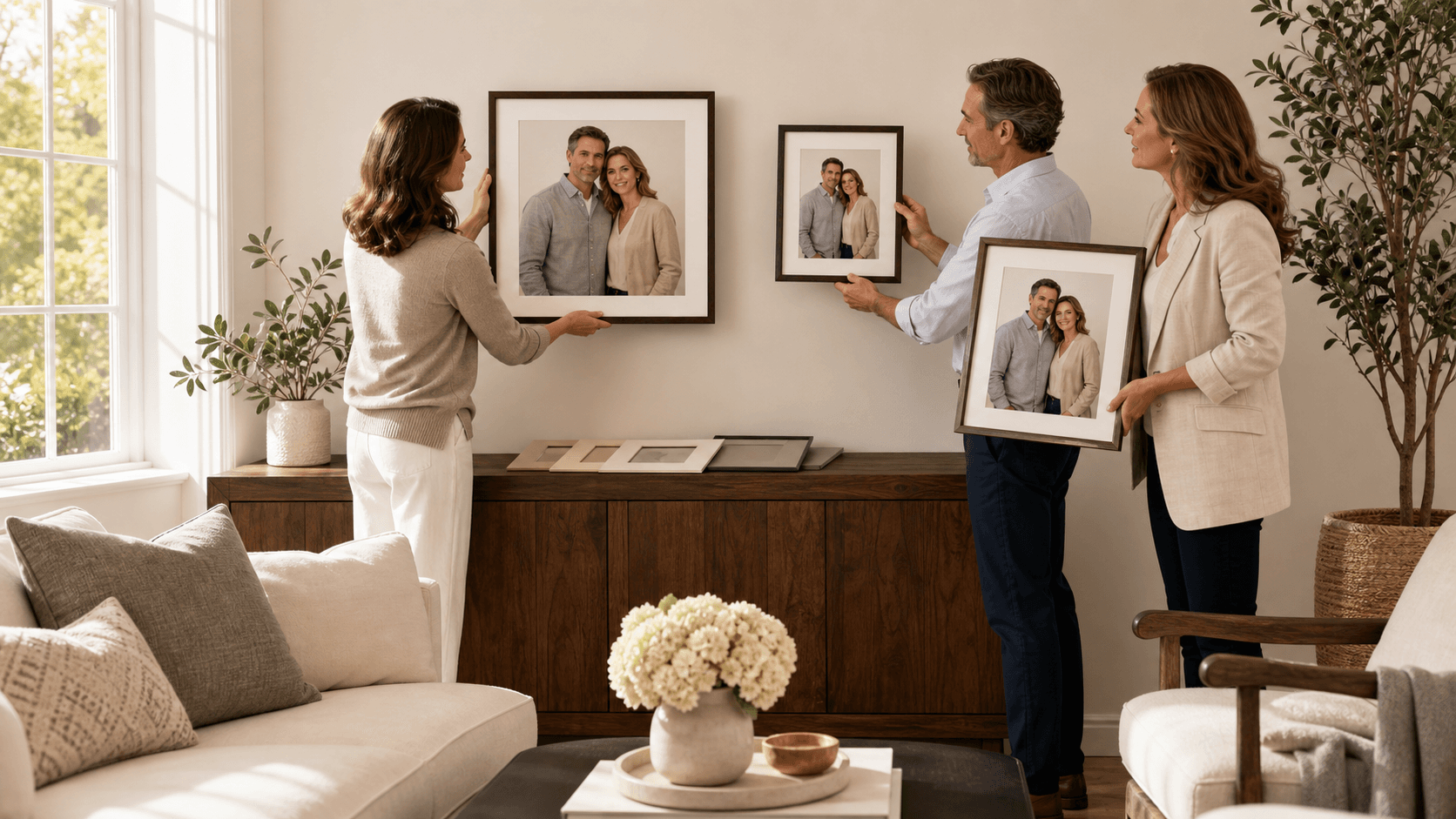
A seasoned portrait artist can sketch layouts or create simple visual previews based on photos of walls before a single print is ordered. That planning step helps avoid guesswork and gives confidence that the final collection will feel balanced, not cluttered.
Choosing the Right Rooms for Portrait Art
Not every portrait belongs in every room. Different spaces call for different kinds of images and different levels of drama or intimacy.
Great starting points include:
- Entryway and foyer: One strong, eye-level portrait lets guests know who lives here and sets the tone immediately
- Living and family rooms: A cohesive gallery showing family connections, candid moments, or a mix of individual portraits that start conversations
- Dining room and hallways: Vertical pieces, storytelling series, or generational portraits that invite a slower look as people pass by
- Bedrooms and home offices: More intimate pieces, quiet portraits, or professional branding artwork that feels personal and motivating
Traffic patterns and viewing distance matter too. In South Jersey row homes and Philadelphia rowhomes, walls may be narrower and hallways closer, so slightly smaller portraits at eye level can feel right. In larger Camden County suburbs with open floor plans, portraits often need to be larger so they read clearly from across the room.
A Camden County photographer who spends time in local homes, from older Victorians in Haddonfield to newer builds nearby, understands common ceiling heights, wall shapes, and window placements. That experience, combined with a fine arts background, makes it easier to recommend sizes and arrangements that fit naturally, instead of forcing a one-size-fits-all layout.
Framing and Materials That Honor Fine Art Portraits
The frame and print surface are not afterthoughts. They are part of the artwork itself. Mass-produced frames are often not built for heavier fine art prints or long-term display. Over time, low-quality mats and glazing can yellow, warp, or allow fading.
Custom framing for museum-quality portraiture usually includes:
- Archival mats that protect the print and keep it from touching the glass
- UV-protective glazing that helps slow sun fading
- Solid, well-joined frames that support the weight of fine art paper or mounted prints
Style matters as much as structure. The best frames echo both the portrait and the room:
- Gilded or ornate frames feel at home in traditional spaces or historic homes
- Clean, simple frames work well with minimal or modern interiors
- Neutral, timeless finishes are usually safest for portraits meant to stay on the wall for many years
A portrait artist trained in the fine arts treats each print like a gallery piece. That training guides recommendations toward the right print surfaces, such as canvas, fine art paper, or mounted prints, based on where the portrait will hang and how it will be lit. The goal is to protect the image and keep it looking rich and true for decades.
Lighting Portraits Like a Gallery
Even a beautifully framed portrait can fall flat in poor light. Good lighting gives depth, detail, and presence.
Natural light is a helpful starting point, with a few cautions:
- Avoid strong, direct sun on prints, which can cause fading and glare
- Consider how light moves through the room at different times of day before choosing a wall
- Try to place portraits where they receive soft, indirect brightness instead of harsh beams
Dedicated art lighting can take things further. Picture lights mounted above the frame, track lighting, or carefully angled recessed ceiling lights can gently wash the surface, bringing out texture and detail.
Different finishes react differently to light. Matte and canvas finishes usually reduce glare, while high-shine surfaces can reflect windows and lamps. A fine-art-trained Camden County photographer understands how print surfaces and lighting interact and can recommend both placement and finish so faces are clear and tones remain true from every angle.
Seasonal Refresh and Long-Term Art Planning
Autumn often acts as a natural deadline. Many families and professionals want portraits created, printed, framed, and installed before holiday gatherings and long winter evenings at home. Planning with wall art in mind from the start makes this process smoother.
Helpful ways to think ahead include:
- Choosing wardrobe colors that feel at home with existing paint, furniture, and décor
- Planning small series that can grow with future sessions, like adding a new portrait to a family wall every few years
- Thinking about milestones such as graduations, professional achievements, or anniversaries as additions to an evolving collection
Working long-term with the same fine-art-trained Camden County photographer keeps a home collection feeling harmonious. New portraits can be designed to sit comfortably beside older ones, so nothing feels out of place as children grow, careers shift, and rooms are updated.
Turn Blank Walls Into a Personal Fine Art Collection
A simple first step is to walk through each room and notice which blank or underused walls feel important. Entry walls, the space above a sofa, a quiet corner in the primary bedroom, the stretch of hallway between bedrooms, each of these can become an anchor space for museum-quality portraiture instead of a spot for temporary décor.
From there, collaboration with a seasoned portrait artist trained in the fine arts allows for a complete plan that covers sizing, framing, and lighting together, rather than one decision at a time. With thoughtful design and careful printing, a home in Camden County or Philadelphia can become its own personal gallery, filled with portraits that are not only beautiful, but deeply meaningful for generations.
Get Started With Your Project Today
If you are ready to preserve your family's story with natural, timeless images, we would love to collaborate with you. Explore the work of our Camden County photographer to see how we capture genuine connections and meaningful moments. At Colette Oswald Photography, we take time to understand your vision so every session feels relaxed, personal, and true to you. Reach out to schedule your session and let us start planning photography you will be proud to share for years.